Strategic communication is vital for the 10 Year Health Plan

The Blue Lozenge HEART model provides a framework for impactful communication across the NHS.

The 10 Year Health Plan for England represents the most significant plan for healthcare transformation in decades. Yet history tells us that strategic plans succeed or fail based on one critical factor: communication.

Across healthcare, the standard and quality of communication is variable. Many people don’t understand the purpose and value of communication or how it can genuinely make a difference to people who work in healthcare and those who benefit from it. Poor communication doesn’t just cause frustration; it wastes precious time for both staff and patients, and when you have limited time to live, every moment matters.

That’s why we developed the HEART model for healthcare communication and engagement: a proven framework that can help teams transforms ambitious policy into lived reality.

Impactful healthcare communication and engagement matters more than ever

All kinds of healthcare transformation projects fail, technology, workforce, estates and clinical. They fail not because they aren’t good ideas but because of inadequate communication and engagement. The 10-Year Health Plan for England demands three fundamental shifts:

  1. Hospital to community care
  2. Analogue to digital system
  3. Sickness to prevention

Each shift requires millions of individual behaviour changes across patients, staff, and communities.

When communication breaks down, the consequences ripple through the entire system. Communities and healthcare teams resist changes they don’t understand. Patients miss appointments because they don’t understand what’s expected. Staff spend hours explaining processes that should be clear from the start. Clinical teams repeat the same information because systems don’t talk to each other.

This is why strategic healthcare communication and engagement is essential. The HEART model, developed specifically for NHS and healthcare organisations, provides a comprehensive framework for communication excellence that drives real operational impact. It outlines the purpose of strategic communication and engagement in healthcare and has been developed from Government Communication Service best practice.

Effective communication doesn’t just improve patient satisfaction, it directly impacts operational efficiency. When people understand their care pathways, they come prepared. When staff have clear internal communications, they work more effectively. When communities understand service changes, they support rather than resist transformation.

The HEART model

H – Hear with empathy

We listen to and deeply involve diverse communities and people. We go beyond surface level listening to truly understand the perspectives, concerns and experiences of different stakeholders. We create meaningful, two-way dialogue that demonstrates genuine commitment to understanding.

E – Explain with transparency

We craft clear, honest communications about policies and decision-making processes. We build trust through open, accessible explanations that provide context, rationale and potential impacts. Our audiences are often diverse we therefore check understanding and deliver messages at times that help people to understand.

A – Accelerate operational impact

Strategic communication is a critical lever for operational performance. We connect operational goals directly to meaningful outcomes for our workforce, communities and stakeholders. We support the delivery of key shifts in care delivery – from hospital to community, analogue to digital, and sickness to prevention. We proactively measure and evaluate communication impact.

R – Reputation through trust

We manage reputation by consistently demonstrating progress, reliability, integrity and commitment. We build credibility through transparent communication, delivering on promises and aligning actions with values and needs. We strengthen trust through patient choice and empowerment. When things go wrong, we own mistakes and rebuild trust through honesty.

T – Transform through communication

We create transformative communication that drives positive behaviour change with our workforce, patients and citizens. We use strategic storytelling, evidence-based messaging and targeted engagement to inspire action, build understanding, and support meaningful change across healthcare ecosystems.

More time to care and more time to live

Strategic healthcare communication and engagement isn’t about apps, posters, messages, prettying things up, it’s about creating the conditions where healthcare works more effectively for everyone. When communication is done well, it:

Gives healthcare workers more time to care by:

  • Reducing the need to repeatedly explain processes and procedures
  • Improving patient preparation and compliance
  • Streamlining referral and discharge processes
  • Building stronger team collaboration and understanding
  • Reducing complaints and crisis management workload

Gives patients and citizens more time to live by:

  • Helping them navigate healthcare systems more easily
  • Enabling them to make informed decisions about their health
  • Reducing anxiety and uncertainty about their care
  • Empowering them to take control of their health journey
  • Creating services that actually meet their needs

Implementing the HEART model for NHS transformation

The neighbourhood health service won’t emerge from policy papers, it requires communication that helps people navigate integrated care with confidence. Digital-first care needs more than technology; it needs communication that builds capability and trust. Prevention strategies must inspire people to understand why healthier choices matter for their own lives.

Healthcare communication professionals who understand operational realities aren’t just storytellers, they’re performance improvers. They create measurable improvements that reduce costs, enhance outcomes and free up clinical capacity where it’s needed most.

The evidence is clear: effective communication in healthcare settings improves patient satisfaction, reduces costs, promotes better health behaviours, and enhances staff wellbeing. When people understand their care, trust their healthcare providers, and feel empowered to make healthy choices, the entire system works more effectively.

Making the 10 Year Health Plan work

The 10 Year Health Plan for England gives us the ambition. Strategic communication and engagement provide the means to achieve it. The HEART model offers healthcare leaders a practical framework to move from policy analysis to transformational action.

Every communication choice either builds or erodes trust. Every stakeholder interaction either strengthens or weakens reputation. Every conversation either accelerates or hinders the operational changes our communities desperately need.

Communication isn’t the nice-to-have that comes after strategy—it’s the engine that drives healthcare transformation. The question isn’t whether healthcare communication matters, but whether we’re using it strategically enough to deliver the change our patients and communities deserve.

When we get communication right, we create the conditions where healthcare teams can focus on what they do best: providing excellent care. We help patients become partners in their own health journey. We build communities that support rather than resist positive change.

This is how strategic communication and engagement gives everyone more time to care and more time to live.

Let’s get to the heart of the NHS 10 Year Plan

We need a real conversation about the strategic role of communication and engagement in making the neighbourhood health service a reality. 

At the heart of today’s NHS 10 year plan announcement are people. The plan marks a pivotal moment for healthcare transformation. But ambitious plans need more than good intentions – they need strategic communication and engagement that involves real people. The type of engagement that truly listens to hear and from that information, important insights inform practical policy ideas. That realistic policy can then be put into practice, through impactful campaigns and communication activity. 

The shift to neighbourhood health services isn’t just about reorganising care delivery – it’s about fundamentally changing how communities, healthcare professionals, and local authorities work together. This requires communication that builds trust, explains complex changes clearly, and engages diverse stakeholders authentically. Without it, even the most well-intentioned reforms risk becoming isolated policy documents rather than lived community experiences. 

At Blue Lozenge, we believe strategic communication and engagement isn’t an add-on to transformation – it’s the critical lever that makes change possible. From helping communities understand new services to aligning multi-agency teams around shared goals, communication shapes whether ambitious plans become meaningful improvements to people’s lives. 

Next week, we’ll be sharing how our HEART model can support the NHS 10 Year Plan’s delivery. Because when communication is truly at the heart of transformation, everyone benefits.

Blue lozenge 25: Strategic Healthcare Communication

The NHS brand is a masterclass in demonstrating the power and value of professional, strategic communication in healthcare. 25 years ago this month the national roll out of the NHS blue lozenge began. Healthcare communication professionals across the land were equipped with a new set of national guidance explaining how they should use the new corporate identity. 

The NHS blue lozenge very quickly became one of the most recognisable logos, not only in England, but across the world. A study by NHS England found that, by 2015, the NHS logo had, at 98%, almost universal recognition[1]. People felt that it had existed “forever”. The study found that, “for the general public, the NHS is broadly understood as a single entity with an overarching ethos: the NHS logo is a signifier of consistent, high-quality healthcare, and it is also – and independently – a signifier of the public purse.” 

The NHS brand has powerfully shaped the English public’s perception of its national healthcare service. This wasn’t always the case. When the NHS was created at the end of the 1940s, a hospital was just your local hospital; the larger structure behind it was less tangible. The People’s History of the NHS explains [2]: 

“Even the NHS acronym had not yet become widespread. In many instances, people were told about the ‘new health service’, not even the ‘National Health Service’. Labelling was far less consistent and less important than it was to become.” 

Effective communication helps to make the complex simple. This was well understood when the NHS brand was introduced, it brought together over 600 variations into one compelling corporate identity, an identity that resonated with every single member of the public. The values of that identity were later embodied into the NHS Constitution. And the recent report, the British Social Attitudes Survey, found that the public commitment to the underlying principles of the NHS are as strong as ever [3]. 

The NHS brand evokes purpose and trust, and in a world where public trust in the NHS is declining and there are huge challenges with the health and care workforce – proactively managing communication has never been more important. The reputation of the NHS is based on three factors, performance, behaviour and communication. This is known as the reputation equation: 

The NHS brand provides a single identifier for healthcare – the double-edged sword of an effective brand is that public perception is often polarised. Therefore, an individual’s experience of performance, behaviour and communication at a local NHS service means that they conclude that the whole of that service is either evangelically good or wholly inadequate. Neither of which are likely to be true.

Effectively managing communication in healthcare leads to more time to care

What is true is that there are huge benefits in proactively managing your brand and communication. In healthcare we believe that the ultimate benefit is that it provides more time to care. Rolling out one effective brand saved millions of hours of local time and budget, where previously hundreds of variations existed. Time and money that could be spent elsewhere. One, strategic, powerful programme of communication still helps a workforce of over 1.4 million people and a population of around 56 million understand the goals, strategic approach and direction of our health service. 

Branding isn’t the only place where the power and value of communication can be seen in healthcare. 

  • For internal communication there is a positive correlation between better healthcare, employee communication and engagement and work-related commitment; a negative correlation with turnover intentions [4]. 
  • For operational communication there is a positive correlation between higher levels of workforce engagement and reduced mortality rates in hospital [5].
  • For patient communication there is a positive link between the use of online patient feedback and better-informed quality improvement projects [6].
  • For behaviour change communication effective community engagement underpinned the success of the Covid-19 vaccine campaign in improving uptake in marginalised groups. 

This is why we and hundreds of communication professionals in health and care turn up to work each day – not to pretty a poster or draft a powerpoint. Let’s be clear that investment in well thought through communication is never a cost pressure it is always a cost saving – and if we need a reminder let’s just look at the power of the NHS brand!  

As part of our celebration of 25 years of the national rollout of the NHS blue lozenge we’ve asked some well-known experts their views on the NHS brand and why think it’s endured and what the future will hold. Take a look. 

References

[1]  NHS England, 2016. https://www.england.nhs.uk/nhsidentity/wp-content/uploads/sites/38/2016/08/NHS-Identity-Research-phase-one-and-two.pdf 

[2] https://peopleshistorynhs.org/encyclopaedia/branding/

[3] Nuffield Trust, British Social Attitudes Survey March 2024

[4] University of Greenwich Greenwich Academic Literature Archive – Evaluating the evidence on employee engagement and its potential benefits to NHS staff: A narrative synthesis of the literature

[5] Hospital Workforce Engagement and Inpatient Mortality Rate: Findings from the English National Health Service Staff Surveys | Journal of General Internal Medicine (springer.com)

[6] University of Oxford Using online patient feedback to improve NHS services: The INQUIRE multimethod study – ORA – Oxford University Research Archive

Blue lozenge 25: Strategic Importance of Brand

We’re celebrating 25 years since the national roll-out of the NHS brand. Following an intelligent rebranding exercise in 1999 the NHS ‘blue lozenge’ has been synonymous with one NHS and a symbol of national pride.  

Branding is a vital part of any business or organisation. It goes way beyond the visual elements of a logo and typography and begins to tell a story in the minds of the public about the values and purpose of the organisation it represents. Investing in your brand is an investment in perception and trust. It is a mechanism to influence how your audience perceives your service or business – creating an emotional connection that resonates, builds trust, credibility and a sense of belonging in the hearts of the public and the workforce. 

This was well understood by the Labour government in 1999 when they introduced the Primary Care Group model in the NHS, and mandated the use of a unified corporate identity across the NHS. The single identity brought together 600 variations into one compelling corporate identity. 

Prior to this the government had no visual shorthand to refer to the publicly funded health service. They were not able to easily distinguish between publicly funded provision, the private or the charity sector.  

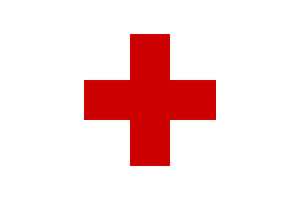
This caused a problem in the 1980s when the opposition Labour party used the Red Cross identity to represent the NHS, breaching the Geneva Convention. After 1999, governments had an incredibly easy way of referring to the health service. 

How taxpayer’s money should be used in the NHS is rightly scrutinised, however, at the time of the national rollout of the branding exercise the investment was mistakenly criticised. Like any well considered communication exercise, the investment was a cost saving not a cost pressure. The core design elements of the NHS blue lozenge already existed and as part of the national rollout these were formalised. By using one logo with clear guidelines there was not a requirement for further investment in brand development. Trusts were asked to replace existing artwork as part of natural refreshes of signage and information rather than replace assets immediately.

As part of the brand identity the simplicity of the blue lozenge was and still is a core strength. It is neutral, contains no political signifiers and is neither particularly progressive nor traditional in its design elements. The simplicity meant that it was straightforward for communication professionals in local organisations to implement. This helped the new identity gain support even though many organisations were being asked to replace beloved and historic logos, the logic was undeniable. 

Whilst recent results from the British Social Attitudes Survey from the King’s Fund suggests that public satisfaction in the NHS is at an all time low, the strategic importance of the NHS brand still stands today. The double edged sword of an effective brand is that public perception is often polarised. The service is considered either evangelically good or wholly inadequate. Neither are true. The NHS brand remains, as it was in 1999, representative of a tapestry of complex services, systems and cultures.  

Image of the Red Cross

The Red Cross is an internationally protected emblem and its misuse constitutes a breach of the Geneva Convention

The NHS brand is however a masterclass in how to forge identity and purpose and how to help a workforce of 1.4 million people and a population of around 56 million have a clear understanding of goals, strategic approach and direction. It is an example of the value of investing in professional strategic communication.  

We’ve asked some well known experts their views on the NHS brand and why think it’s endured and what the future will hold. Take a look. 


References:

[1] https://peopleshistorynhs.org/encyclopaedia/branding/

[2] Public Satisfaction With The NHS And Social Care In 2022 | The King’s Fund (kingsfund.org.uk)

Blue lozenge 25: Celebrating 25 years of the national rollout of the NHS brand

This month we’re celebrating 25 years since the national rollout of the NHS brand.  Following an intelligent rebranding exercise in 1999, the new identity replaced 600 brand and sub-brands to create one corporate identity. The NHS ‘blue lozenge’ became synonymous with One NHS and it became a unifying symbol of national pride.  

It is from this that we developed our own company name as we seek to personify the same values of collaboration and integration. But how did the NHS brand become so iconic?

How did such an iconic brand come into being?

NHS Logo and brand details

NHS logo

Whilst the blue Pantone 300 lozenge and the Frutiger bold italic ‘NHS’ lettering came into being much earlier, the national rollout of the NHS brand began in earnest in April 1999. Since then, it has endured and has been the centrepiece of government healthcare policy. 

In 1999, Labour formalised the move away from a healthcare model that aimed to treat people on an illness-by-illness basis and towards a system that can handle complex needs that require cross-departmental co-ordination. It replaced the internal market with 481 Primary Care Groups (PCGs). These PCGs were to operate under a unified NHS identity. 

It can be hard, even for those of us old enough, to remember how we viewed the national health service before the unified NHS identify was introduced. It was likely that we simply thought of our own local doctor and hospital. A 2015 NHS England study found that people viewed the NHS logo as having been there “forever”, when in fact it had been a common sight for the public for less than two decades at that point.[1] 

Since the logo’s introduction, the NHS model has evolved numerous times. Over time, PCGs became Primary Care Trusts (PCTs), which then became Clinical Commissioning Groups (CCGs) before the introduction in July 2022 of Integrated Care Boards (ICBs). Through all of these evolutions and successive governments, no parliament has made any fundamental changes to the NHS identity. 

The appearance of the NHS logo in Danny Boyle's Olympics opening ceremony

Source: BBC

Film director Danny Boyle understood the power of the NHS brand and featured it prominently in the London 2012 Olympic opening ceremony. During the COVID-19 pandemic, the logo and its design elements were used to rally the public around social distancing rules and provide visible public support to England’s healthcare workers. 

Today, the national corporate identity of the NHS brand has endured for 25 years more or less unchanged, a 2017 tightening of usage guidelines aside.[2] In a world where corporations undergo rebranding exercises every few years, the NHS logo, like the health service it represents, has held remarkably steadfast and dependable.  

At the time of the national rollout, as is often the case, the investment in communication and branding in the NHS was mistakenly criticised. However, the longevity and impact of that brand cannot be underestimated. It is a testament to the power of simple, powerful strategic communication in healthcare.  

We’ve asked some well-known experts and members of the public their thoughts on the brand, why they think it’s endured and what they think the future holds. Take a look. 

References

https://www.england.nhs.uk/nhsidentity/wp-content/uploads/sites/38/2016/08/NHS-Identity-Research-phase-one-and-two.pdf

https://threetenseven.co/work/nhs-england-nhs-identity/

Planning Effective Winter Pressures Campaigns

If pressures on NHS services could truly be alleviated by posters in waiting rooms urging people to “choose the right care” or “think first before you go to A&E”, winter would be a walk in the park for NHS communications professionals. 

But the reality is that winter communications campaigns are a really tricky thing to get right. 

And to be clear, when we say “right”, we aren’t talking about the graphics looking slick and sign-off coming through from the Executive team on time. 

We’re talking about having a tangible impact on operational pressures. Reducing the 20% or so of A&E visits which are clinically unnecessary. Trying to reverse last year’s trend of falling flu vaccine uptake rates in older adults and frontline healthcare workers.  

Despite all the work that goes into them, sadly there isn’t a lot of evidence that many winter communications campaigns have the impact intended. Where thorough evaluations have taken place, most of the results are disappointing. Take NHS Wales’ multi-year Choose Well campaign; an evaluation by Audit Wales suggested the true impact of the activity on reducing urgent care demand was “minimal”.  

At Blue Lozenge, our perspective is that while the objectives of winter campaigns tend to be easily understood, the underlying behaviours they seek to change are often fiendishly complex. Understanding of these behaviours is fundamental to influencing them, yet the briefs communicators are asked to work from are almost always light on detailed insight – putting communications professionals on the back foot right from the outset. 

For example, an often-targeted group for urgent care “demand management” campaigns is parents of younger children; up to 90% of A&E attendances related to this population result in no further treatment

But helping this group to make more appropriate care choices is likely to take much more than simple signposting. An excellent “realist synthesis” of evidence about the root causes of over-usage of urgent care by younger parents identifies at least six distinct (but interrelated) mental mechanisms at play. These range from system-induced frustrations about the lack of appointments in primary care, through to cognitive biases related to risk perception which are heightened in parents. 

Every NHS communicator will have their own hard-learned experiences of what works and what doesn’t work with regards to winter campaigning. At Blue Lozenge, we’ve found three key ingredients for planning effective behaviour change activities which might be worth considering as we head into winter: 

1. Co-design your campaign with patients, communities and staff 

One of the biggest success stories of the pandemic for NHS communicators was harnessing the power of people, communities and frontline staff to change behaviours. From engaging with religious leaders to drive vaccine uptake rates in local communities, through to the power of staff stories to encourage people to #StayAtHome, Covid-19 emphasised that communications really is a collective activity. 

We believe that bringing patients and carers together with communicators and frontline staff to develop creative campaigns is an approach that is perfectly suited to the multifaceted problems we face over winter. Meaningful engagement and involvement activities offer the chance to build an understanding of target audiences impossible through secondary research alone. Going further, co-design and co-production have the potential to deliver new types of public health intervention, blurring the lines between communications, engagement and community-led health and care. 

Some striking examples of this type of this type of work include recent piloting of blood pressure testing in barbershops and HEAL-D, a south London diabetes programme co-designed with the African and Caribbean communities. 

Understanding that often the barriers to effectively involving people and communities in planning and delivering campaigns are practical – especially during the frantic winter period – we have designed our own framework for bringing people together to power change. This framework, which we call BlueShift, is intended to easily flex and scale to different behaviour change briefs, as well as bearing in mind NHS England best practice on involvement

2. Find the opportunities to nudge rather than shove 

“Nudge theory” has rather fallen out of favour in public sector communications in recent years, but there is still plenty of inspiration that NHS communicators can take from its principles. 

We know that trying to get the public to do a 180 on deep-seated health behaviours is a big ask. So why not take a more nuanced approach and bring the levers of psychological science into play. 

For example, we’ve seen that the timing of interventions can be crucial in making them a success. 

Working with a large ICS, for the past two winters we’ve run campaigns encouraging people to use 111 Online instead of heading straight to urgent care. So far, so familiar? 

Our point of difference has been the timing of when people see our messaging. Using Google search marketing, we redirect users towards the 111 triage service at the very moment they are searching for urgent care services near them. 

The results have been remarkable; tens of thousands of users have chosen to click onto the 111 Online service from our ads. Using local system data, we estimate that each redirection away from A&E towards community or self-care has cost less than £1.  

3. Operationalise and optimise 

Communicators and data analysts have different superpowers; we’ve found that bringing them together to tackle winter is a bit like being able to assemble your own team of Avengers (or X-Men, if that’s the comic-book-verse you prefer). 

Being able to analyse and interpret the NHS’s vast datasets unlocks a new perspective on behavioural and tactical insights. Whether it’s cross-referencing Census information against your targeting to make sure you’re reaching underserved populations, or digging into Hospital Episode Statistics (HES) data to figure out which conditions local people are actually presenting at A&E inappropriately with, data helps you make better decisions. 

And during the campaign, a close working relationship between operations and communications teams gives you the best chance of reacting effectively to the curve balls which winter tends to throw at us all. 

Digital advertising gives us the option of responding in near real-time to emerging operational pressures; in recent years we’ve worked closely with NHS teams to pivot activity to focus on particular hospital catchment areas as they experience capacity challenges. And likewise, the data we get about how audiences are responding to campaign messaging can be fed back to hospital or ICS teams to inform planning and operational decisions on the fly. 

Whatever your brief this winter, we’re here to help. We’ll be running a “Chatham House rules” workshop with NHS communicators from across the country to discuss best practice on winter campaigns. If you’d like to attend, or if you want to find out more about any of the case studies mentioned in this article, please get in touch.

Communications for Fairer Healthcare Access

The Care Quality Commission (CQC) has today released its annual State of Care report, revealing the challenging landscape of health and adult social care in England. In the face of a cost-of-living crisis and mounting workforce pressures, there’s a growing risk of “unfair care”. This term encapsulates the concern that individuals who can afford private treatment might receive quicker access and better care, while those unable to pay could experience longer waiting times and reduced access. Given this context, it’s important for us to consider how effective communication can play a pivotal role in helping to address these issues.

Transparency and accessibility of information are essential for a fair healthcare system. Communication can bridge information gaps between healthcare providers, policymakers, and patients. This includes providing clear guidance in a format that is easy to understand and available to those with accessibility requirements. Well-informed individuals are better equipped to make healthcare decisions that suit their needs. It also means being honest and transparent with all stakeholders so that the right people can provide scrutiny. Media relations and a robust PR approach are key tools to ensuring that happens.

Effective internal communication within healthcare organisations is essential in addressing the challenges outlined in the CQC’s report. Staff members are at the heart of delivering quality care, and they need clear and open lines of communication. Ensuring that healthcare professionals are well-informed about organisational changes, patient needs and safety protocols is crucial. It’s equally important to provide a platform for staff to voice their concerns, suggestions and insights. By fostering a culture of open communication and active listening, healthcare organisations can create a safe and supportive environment for their workforce. The outcome of this directly affects workforce challenges by improving staff morale and increasing retention, ultimately enhancing the quality of care provided to patients.

The challenges in healthcare require collaborative efforts from all stakeholders to co-produce solutions. Effective communication facilitates dialogue between providers, policymakers, and the public and ensures that their voices are heard and their experiences are valued. By bringing these groups together, we can identify innovative solutions while considering the needs and challenges faced by all groups. Collaborative partnerships enable collective problem-solving and the development of initiatives that benefit all.

The CQC report highlights disparities in healthcare, particularly for those from ethnic minority groups and individuals with long-term conditions. Effective communication can be a catalyst for change by shedding light on these disparities and using best practice to ensure seldom-heard groups are included. By advocating for cultural awareness, addressing racial stereotypes and improving accessibility and inclusion we can work towards eliminating healthcare disparities.

While the report identifies challenges, it’s important to celebrate success stories in healthcare. Communication can highlight the dedication of healthcare professionals and organisations working tirelessly to deliver high-quality care under challenging conditions. Recognising their achievements can inspire others and instil a sense of pride and purpose in the healthcare community.

The Care Quality Commission’s State of Care report serves as a critical reminder of the challenges facing health and social care in England. In this complex landscape, effective communication is not just a tool but a cornerstone for achieving fairer access to healthcare. By raising awareness, listening to experiences, bridging information gaps, fostering collaboration, challenging disparities, and celebrating success, we can work towards a healthcare system that ensures quality care for everyone, regardless of their financial means. In doing so, we honour the dedication of health and care professionals and advance the well-being of all those who rely on the system.

For information about the services Blue Lozenge provides, click here.

For information about past work we’ve done, check out our case studies. 

More time to care

The Blue Lozenge health and care reputation framework

In a world where public trust in the NHS is declining and there are huge challenges with the health and care workforce, proactively managing reputation has never been more important. We’re therefore building a reputation framework to support health and care boards and leaders.

Reputation is not about keeping negative stories out of the news media, or a lack of transparency when things go wrong. Managing reputation is about performance, behaviour and communication. It is about being honest about what’s working and what isn’t, explaining performance in a way that people understand and listening to understand what needs to be improved, then making those changes.

At Blue Lozenge we’ve adapted something called the reputation equation and applied it to health and care. It is our belief that the effective management of reputation in health and care gives all those who work in health and care more time to care.

There are huge benefits for health and care providers if they proactively manage their reputation, workforce and population experience. An integrated communication strategy can help to maximise the opportunities and mitigate the risks, whether this is an individual organisation or an entire integrated care system.

Whilst these benefits are myriad, some examples include:

  • A positive correlation between better healthcare employee communication and engagement and work-related commitment; a negative correlation with turnover intentions;
  • A positive correlation between higher levels of workforce engagement and reduced mortality rates in hospitals;
  • A positive link between the use of online patient feedback and better-informed quality improvement projects;
  • South London Listens – an NHS-led project engaging communities in improving services in south London – leading to the co-development of innovative and effective new clinical interventions to support mental health;
  • Strong community relationships underpinning the success of the Covid-19 vaccine campaign in improving uptake in marginalised groups.

We’ll look at each of these areas in depth in the coming months and the evidence sources behind them.

The ultimate consequence of a poor reputation in health and care is that there is less time to care. Anyone who has worked in a provider organisation supporting their improvement journey will have noticed that organisations with low public trust receive more complaints and the workforce are unwilling to advocate for the organisation. In many cases morale is sometimes so low that even those working in caring roles remove their name badges and do not want to be associated with the organisations they work for. Once communication has broken down with the public or with the workforce it raises stress and anxiety and impacts on the safety of care. Organisations and their leaders are no longer given the benefit of the doubt.

Once communication has broken down with the public and the workforce, organisations and their leaders are no longer given the benefit of the doubt.

The reputation opportunity in health and care is immense because improved communication leads to organisations and whole health systems having more time to care. This is because there is honesty and realism in interactions, people taking pride in their work, services and organisations listening and implementing change, boards spend less time focused on national or regulatory interventions.

Our Blue Lozenge health and care reputation framework and approach assesses reputation risk and opportunity across six key areas. We provide an audit and board development process to support individual providers and integrated care systems. Reputation risk and the mitigating actions you need to take are a core part of your board assurance framework. We can help you implement an actionable plan and demonstrate how strategic communication and engagement can help your organisation and system have more time to care.

If you would like more information, a copy of our full framework or a conversation about how we can support you please get in touch. hello@bluelozenge.co.uk

NHS 75 – Leah Morantz Covid-19 Welsh communications and inequality

In the fourth part of our NHS 75 series celebrating leading healthcare communicators, we spoke with Leah Morantz. Canadian-born Leah is Head of Communications and Stakeholder Engagement at Public Health Wales and led the Welsh communications response to COVID-19. 

Leah shared with us her experiences as a high-level public health communicator, handling the “infodemic” and what the public sector can learn from the private sector. 

Q1: Why should the NHS care about strategic communications? 

Leah Morantz: Yeah, really big question. I don’t think it’ll be a surprise to anyone watching this interview that the NHS is facing an existential challenge. The pressures are absolutely massive, and it feels like every day there are more headlines about waiting lists and the ongoing financial pressures on the NHS and staffing and everything else. 

Within that context we also have a UK population that’s declining in overall health. Life expectancy isn’t increasing anymore but the reality is that situation isn’t all down to healthcare and healthcare provision. The NHS can’t fix that in and of itself. It’s not a case of having more surgeons and more doctors and more nurses. We’ve got to be thinking about the wider determinants. 

What are the things that affect people’s health and well-being on a day-to-day basis? And that’s about having healthy communities, about having meaningful work, about having safe housing, a good clean, safe environment to live in. And all of those things contribute to not only well-being, but to good health and to longevity. When you bring that into the context of strategic communications, it’s really important that the public has a good enough knowledge and understanding of this narrative specifically for them to know and do what they can to keep themselves healthy. So there’s definitely a role for strategic communications in empowering people. 

But also the other aspect of that is helping to empower the general public to be able to influence politicians towards making more favourable policies, policies that favour health and well-being. I see those as being two really, really important strands to how strategic communications can help the NHS and I think that’s not specific to any particular health trust or any particular NHS organisation, it’s really about how as a health comms community we hold those principles in some of the work that we do. 

Blue Lozenge: So there’s a political aspect to it? 

I think there’s a political aspect to it, but I also think that we have to tread the line on a daily basis between the politics and the reality. Health is a devolved portfolio. So, in Wales, it’s Welsh Government that sets health policy for NHS Wales. But we have a role in influencing health policy by providing health intelligence, and by providing really good research that helps policymakers to understand how changing the policy landscape could lead to better health and well-being for people in Wales. We also have a role in helping to shape the public discourse – what is the conversation that’s happening in the media, and how do we shape the stories so that we’re influencing the general public through the use of media as well as other channels. And I think in the context of public health, and the context of influencing the wider determinants and in terms of influencing policy, because we’ve got an evidence-based public health aim, that role of strategic communications can help us achieve where we’re trying to get to in the long term. 

Q2: You led the Welsh COVID-19 communications response — what were the biggest challenges you faced and how did you handle them? 

LM: In one sentence, I would say the scale and the pace of change. But when I think back on my leadership experience through that time, I think of the term VUCA, [which] stands for volatile, uncertain, complex and ambiguous. Originally it was a set of terms that was set out by the American military following the Cold War when they had to reestablish how they were going to deal with this really rapidly changing global landscape. 

[VUCA] basically says that those four different things, you can devise different responses to those scenarios based on precedent. But actually my lived experience of the COVID scenario was that it was like VUCA on steroids! Everything was more volatile, more uncertain, more complex and more ambiguous all at the same time. We expect to deal with that in our roles, but it was just the amplification of all of that, all at once, that made it so, so challenging and it was just like everything was turned up to 11. 

The way that I chose to approach it was to really lean back on my training, really lean back on the work that we’ve done in the years leading up to the pandemic and getting our team into a really good place. 

Relying on my knowledge – I know what I’m doing, my team knows what we’re doing. We’ve got really good skills and capability. Relying on the relationships of the people around me, I think that was really, really critical. And specifically within that, really finding myself being more authentically vulnerable in my leadership role than I’d ever been called upon to be in any other context. And so learning that it was OK to share my emotional state, not to the extent that it would negatively affect others, but actually that I’m human too. Sharing that humanity I think really helped the people around me, and particularly the people in my team. 

Q3: Sticking with the COVID theme, how did you work to build trust and confidence in Public Health Wales’s communication efforts, particularly during those times of uncertainty and rapidly changing circumstances? 

LM: Consistency is a really big thing for me in terms of building trust, and also sticking to our territory. Sticking to the things that we’re responsible for having a message on for the public and being clear and consistent about those things. And really doing the best that we could to proactively get on top of as much of the information as we could and reassuring people when we didn’t have the information necessarily. 

And some of that is reflected in the decisions that we made on a tactical level. So decisions that we made about how we published our stats on a daily basis at a specific time so that we could set expectations, deliver with consistency and make it so that people knew what to expect on a day-to-day basis. 

We also reflected what was happening in the public’s mind and how people were thinking and feeling by keeping a close eye on what was happening in the social media space. That that allowed us to respond to what was happening out there in the in the world around us. And I think that also had a big role in how we developed a level of trust. It was making sure that our messaging and talking to people was on the level that people were at at that moment in time. One of the things that we did quite early on in the pandemic when the first lockdown came around was we were really fortunate to be able to work with some quite famous faces in Wales who were happy to work with us to help us reinforce the messaging. 

And rather than coming out and saying you must stay home, you should do this, you should do that, we turned it around and used the principles of social norming to say thank you to people and say, actually, we know that most people are complying with the rules and thank you for doing that. And this is why it helps. So we were really, I think, human about the way that we communicated some of the messages through that that COVID period. But yeah, I think that consistency and our sense of honesty was really important. 

And then finally I would add, we were very fortunate to have some really competent spokespeople and we were quite consistent in how we used those spokespeople through the pandemic period and that builds up a lot of trust in those individuals that then translated in trust in what we were saying as well. 

Q4: A big challenge for many people during the pandemic was grappling with a deluge of information – some accurate, some inaccurate and some intentionally misleading. How did you work to guide Wales through this information overload? 

LM: So I think what you’re asking me is two questions. One is how did Public Health Wales respond to the concept of the infodemic, [i.e.] the flood of information coming from all angles of people. And then secondly within that how do we respond to the misinformation and disinformation that became part of the public discourse and became something that really emerged as a significant issue? 

About the infodemic piece, working within the context of Wales we were able to work across the whole of the public sector to use the same overarching campaign mechanism to get our messages across. Along with public sector partners across Wales, we used the Keep Wales Safe brand architecture to deliver a lot of the messages themselves. 

The other piece, and I talked about this a little bit earlier, was around consistency. That’s about being consistent and owning your territory and knowing what you can speak on as an organisation. And then, secondly, sticking to the messaging that has been approved and cleared and reiterating it so that we’re not coming out with a different version of a press release every day. We were reiterating the same messages over and over to try to gain cut-through. 

The WHO has a whole piece of work they’re doing around Infodemic and that whole set of concepts, which is available on their website. In terms of misinformation and disinformation, I think we would all agree it was one of these really big emerging themes that hit us as communicators and we were all sort of going, wow, that was maybe bigger or worse or more challenging than some of us might have expected so a response was definitely required. 

It’s really challenging to come up with rapid on-the-minute responses when you’re a large organisation that typically would operate with lots of layers of approval. That creates a bit of a challenge from a corporate messaging perspective. But as a communications team, what we could see around us was definitely that the misinformation strands were quite real. 

We took the approach of [keeping] all of our channels open during the pandemic. So I think that’s the first thing to say. Not every organisation did or was able to do that so we had hundreds of thousands of direct messages and hundreds of thousands of comments on our channels and that called upon us to make some decisions. We made a decision [to be] open and transparent and accessible, which is why we kept all our comments on. 

But there were certain times and certain topics where we took decisions to close the comments. Some of that was because we did not want to elicit the pile-on of mis- and disinformation. Some of it was because we had to manage our mental health. There are times when you just need to be able to step away from the social media channels on a Friday night at 5:00 PM and not worry that the whole weekend is going to run away with you or that the person who’s working the on-call shift on Saturday is going to have to deal with a massive mess. 

There were some practical considerations as well, but that misinformation/disinformation piece was [about] trying to come up with methodologies and tactics, [such as] setting out frameworks for how and when we would respond. We set out clear house rules on our social media channels. We called people out for disinformation or misinformation. If there were known actors that would purposely put incorrect information into the channels we would issue a warning and after three strikes ban people from commenting on streams.  

We did a specific piece of work back in November 2021. We knew from the clinical evidence that a disproportionate number of people in intensive care were pregnant women, and of those many of them hadn’t had their vaccination. We were really trying to understand [their motivation] and we were under some pressure as well from the clinical side to encourage people to take up that vaccination offer in pregnancy because of the increased risk from diminished immune response. 

Some of the reasons for pregnant women not getting the vaccine was to do with fear, the fact that it was a new vaccine, the fact that the evidence was emerging and also this whole concept of disinformation and misinformation that was out there. To approach that problem, we used our social media channels to undertake some research to try to understand the barriers and what was influencing people’s decisions about whether to take up the vaccine offer or not. 

And we also wanted to understand who the influencers were in that context. What we found was that, in pregnancy, women are looking in the main to the midwife to give them advice about whether they should or shouldn’t take up the vaccine offer. That was a key finding, which led us down the road of trying to understand the conversations that midwives were having with pregnant women 

It turned out that the midwives themselves weren’t entirely comfortable with giving that clear advice to take up the vaccine offer. So, we had to work with that group to understand their barriers and understand what was happening there. We did two pieces of work as a result. One specific piece of communications was targeted at the midwives to help give them the facts and information and walk them through how to have a conversation about vaccination with a family coming in talking about their pregnancy. 

And then the second piece was directed specifically at women in pregnancy and helping them to be able to find information that they would need to make decisions. We also made sure that we stayed on top of our social media community in that topic area to reduce the influence of the people on the fence or disinformation. So, there are people that are putting out purposeful misinformation and then separately there’s people that are sort of, Oh well I heard that this isn’t such a good idea is this true kind of stuff. That actually they don’t necessarily have ill will or ill intent, but they’re misinformed or they’re putting out information that isn’t actually true because they don’t necessarily have the facts to hand. 

So, we did a lot of work to moderate that community closely on our social media space. And then we worked with closed community groups on Facebook and elsewhere to help to make sure that we were disseminating the correct messages. And we did see a measurable uptake in vaccination in pregnancy from the launch of that campaign onwards, which was really encouraging and really helped us to think through putting in place methodologies and tactics and frameworks. That helped us to build the case for why that was important and gave us a bit of confidence to keep doing it moving forward. 

Q5: So moving away from COVID now – how has comms and engagement helped to reduce health inequalities in Wales? And what further progress do you think needs to be made? 

LM: Well, I know you set this question up by saying moving away from COVID but actually the whole COVID experience gave us a really important opportunity to think really hard about health inequalities and how we needed to really make sure that we were including as many communities as possible in the messaging and helping to understand what barriers people were facing to taking up the behaviours that we’re asking them to do. So, what’s standing in the way of people taking up their vaccine offer? What’s standing in the way of people using masks when required or staying home when ill? And all of those things. 

The first and most important thing for us is around listening and trying to understand the challenges and barriers. It’s not about just going out there and blasting the messages out. We’ve got to give due consideration to what the lived experience of people is in their context. So, an example of how you can help to encourage people to stay home when they test positive for COVID is providing them with financial help if they’re going to be facing financial hardship as a result. 

Adapting our channel approach was also really important. What we’ve tried to do is to develop trusted relationships within our stakeholder networks and within communities. Because even though we like to think that we’re a trusted NHS body, some people trust their local community leaders or people that they know more than they trust us. So, we’re able to put our messages in the voice of those trusted community partners to help the messages land more effectively. I think those are probably two of the key ways. I think it’s really important to put this on the table – engagement takes a lot of time and effort. It’s not just about setting up a WhatsApp group and blasting some stuff out. It’s about building relationships and making it a two-way situation where you can hear what’s working, what’s not working and what peoples’ needs are. It definitely takes time and energy to build and then retain that trust. 

Q6: You’ve got a background in the private sector. Are there any lessons or working practices from the private sector that you’d like to see brought into Wales’s health system and public sector or vice versa? 

LM: What I’ve seen work really well in the private sector is that they take comms seriously, especially internal communications. In my experience that has been a part of the mix that’s really well invested in and really well understood to have a significant positive impact on productivity, on staff well-being, on the bottom line. 

There’s definitely some work to do to help internal communications be better understood as a lever for positive change. I think that that’s because private sector organisations — particularly large corporates — understand the value of engagement and so they translate that into investment in those activities. In the health sector in particular it’s often very difficult to make the case for things that could be perceived as less tangible. 

And I think the other area is around consistency. So really demonstrating a deep commitment to your brand proposition, whether that’s a public sector brand proposition or private sector, You’ve got to be really, really clear about what your business is, what you’re doing, what is the need of the population or your customer or your service user, what’s the need that you’re intending to meet. And really sticking to that, like ruthless consistency and that’s what good brand proposition work is about. It’s being clear about it and working to deliver towards that. I think that’s something that is done really well in a lot of private sector contexts and which we could learn and adopt much, much more in the public sector for sure. 

Q7: A big part of the NHS 75 is looking forwards. As communications leader, how do you see comms and engagement involving over the coming years? 

LM: Here in Wales in particular, but elsewhere I expect as well, we need to continue to build our case for strategic communications. And I mean really high-calibre public campaigning [and] internal communications. The heady days of the pandemic where leadership looked to communications to solve a lot of the problems are over and we’ve gone back to a bit more business as usual where different parts of the business forget to loop comms back in. 

So I think that, whilst in many places communications teams, communications directors or heads of functions have won a place at the table, we really need to keep working hard to stay there. To do that you’ve got to be really committed to your professional development as a leader in communications, really committed to maintaining standards both for yourself and for your teams. I’m a big believer in membership of professional bodies as a demonstration of that, and also really trusting that communications can be an important lever for change and also for being the voice of the patient. 

It’s not necessarily a new challenge ahead, but I think it’s really holding on and keeping on, driving forward, making that case for communications as a strategic function, as a strategic partner in really making a difference for users and for patients. 


You can follow Leah on X.
NHS 75: Professor Shafi Ahmed VR, AI and the Metaverse in Healthcare

In the third part of our series of interviews with leading figures in UK healthcare communications to celebrate NHS 75, we spoke with Professor Shafi Ahmed. Recently named as one of the top ten surgical pioneers in history by the Royal College of Surgeons of England, amongst other accolades, Shafi has used virtual and augmented reality to stream surgeries to students across the globe. 

Here’s what he has to say about health tech as a communications tool, the potential of the metaverse and how the NHS can incorporate AI and LLMs into its practice. 

Q1: Why should the NHS care about strategic communications? 

Shafi Ahmed: I think communication is so vital in medicine. The NHS has to have an effective communication strategy to allow patients to understand their treatment options, the plans for the health system and how to access some of these services across the UK; as well as [a communication strategy] for the providers who will be treating patients on a daily basis to understand the requirements and how they communicate better some of their policies and ideas around treatment strategies. 

Q2: How should the public’s expectations be managed with regards to concepts and ideas being realised (or not) within the public health system? 

SA: The way healthcare is changing with new ideas about therapies, treatment [and] prevention for example, in clinical practice would mean a different way of working for not only doctors and healthcare workers, but also for patients to access that healthcare system. As we move to more personalised healthcare system with patients being responsible for their own health and being more autonomous and having freedom of choice and being independent, I think it’s absolutely vital that this information is passed effortlessly through the system. 

If you look at secondary care, primary care and the end user/the patients – social care – this breadth of the NHS needs to be more integrated so that information passes freely and it’s as accessible as possible. We’ll look at the patient journey. It’s always been difficult sometimes when there’s friction through a system – there might be a miscommunication and there also might be a struggle in terms of language barriers etcetera. So it’s essential that, when we bring out new ideas, those are conveyed in a way that the patient understands them. [It] might be different languages, it might be for example across television, across radio and across of course information leaflets that might be handed out at primary care services. 

And I think it’s essential that that communication is done properly to ensure compliance and to bring the patient on that journey with the system. Otherwise you get non-compliance and bad outcomes. Ultimately, better communication improves the patient’s journey experience and improves the outcomes. 

Q3: You’ve done a lot of “firsts” during your career. What drives you do push boundaries in this way and have you achieved what you envisaged? 

SA: One of the great things about the NHS is its role in innovation and implementing new ideas – that could be technology – into the healthcare system to allow patients to have better experiences and outcomes. From my experience as an innovator and a futurist, for example, when I did the world’s first Google Glass operation, streaming live across the world or indeed doing the first operation in virtual reality, is to ensure that we were scaling the ideas to a large population. 

For me, it’s about how do you educate a lot of people rather than one or two people that might be close to you? How do you scale and teach hundreds and thousands of people around the world to allow us to improve global health [and] improve access? And so I felt that technology would allow us the way to improve access across the world. 

I think innovation lies at the heart of medicine. Over the last many centuries, there’s always been innovations in healthcare to drive change, whether it’s cancer care, diabetic care [or] cardiovascular care, we’ve always brought new interventions in, such as stents in vascular surgery for example which replaced open heart surgery, we’re now using virtual reality for training the future generation of nurses and doctors. 

It’s absolutely necessary that the NHS maintains its foothold in innovation and becomes a leader around the world in showing how we can implement these changes and new ideas into clinical practice rapidly. And the COVID pandemic has actually forced us to think differently, has asked us to innovate much more quickly and what I’m pleased about is that the healthcare system and the NHS is ready for change finally. And that’s only going to be good for the patient. 

When I streamed the live operation back in 2014, that’s nine years ago, I streamed to 14,000 students across the world – these are medical students and nursing students in 118 countries simultaneously using a smartphone and a streaming app. Immediately that showed the scale that you could connect with people across the world, in any part of the world. Running the virtual reality operation, I trained 55,000 people in 140 countries of 4,000 cities simultaneously showing again the benefit of connecting people across the world. 

And when I did the operations for example using social media, we connected over 56 million people across the world. So using kind of [these] tech solutions, the low cost, high-tech solutions allow everyone in the world to benefit from knowledge of clinicians from other parts of the world. So it’s about equity, it’s about access and also makes healthcare and education more affordable. That’s been my ambition — how do I use my knowledge to [reach] a much wider audience and leave that legacy for future generations. 

The NHS has now embraced what’s called extended reality. That includes augmented reality, virtual reality, mixed reality and over the last few years has now put aside funding to allow new training methods to be developed using virtual reality and augmented reality. And now we are training nurses, doctors, surgeons, medical students across the UK using these latest technologies. And I think that adds some value from traditional models of learning like books and e-learning platforms. We’re just moving seamlessly onto the next generation of tools that allow us to learn better, faster, quicker, and retain more facts. It shouldn’t be replacing traditional methods. It should be supporting or augmenting what we use already to improve people’s experiences with education. 

Q4: You’ve streamed surgeries on a number of platforms. Has VR as an education tool taken off in the way you imagined? Are there other ways that the NHS should be using technology to engage with staff better? 

SA: Virtual reality has now found its place in medical education and also medical therapy. We’re now using virtual reality to treat patients. For example, in the US they treat patients with chronic back pain with VR therapy showing an outcome that’s improved. In terms of education, we are now seeing medical schools, nursing schools [and] postgraduate training programmes in virtual reality as well as interactive platforms allowing people to now engage with avatars that look like patients, for example, using other technologies to allow them to improve their communication, to improve diagnosis and improve the clinical outcomes. 

So now we’re seeing a huge change in the way that the future generation of students are being taught and also for people who are health workers who are now looking for postgraduate training or continued professional development, using these tools for further learning. 

Q5: You’re a believer in the metaverse – how do you see that being used in health and care in the future? 

SA: The Metaverse is clearly in its early phase, we call it the 3D of the Internet. It’s a number of technologies coming together to create a kind of immersive experience. And what I think the Metaverse as being is an additional way of interacting with patients in a virtual environment. Also for education purposes: it might be that patients can learn about drug therapies or which drug to take and the complications and see graphic representation in a 3D virtual environment.  

We see also a way of collaborating. For example, doctors around the world could collaborate for a multidisciplinary team meeting [to] talk about patient care. We also see it for example in education, for example. Anatomy teaching in the future could be based around different specialists coming together with students around the world connected with 3D objects, animations letting you train people virtually. 

So the metaverse is certainly an interesting concept. I think it will find its place over the next few years as people look for other ways of accessing their healthcare system, their doctors and nurses, and also different ways of learning and have [improved] experiences of the healthcare system. But hopefully it will also improve outcomes. So I do see the Metaverse being rolled out at some stage in the next few years, maybe as pilots initially and maybe then a wider rollout. 

At the moment we have conventional face-to-face which is amazing and it’s still the right way of seeing our patients. As a cancer surgeon of course there’s that physical contact, the closeness that’s very important when breaking bad news for example. We’ve now moved to telephone calls and Zoom calls and remote kind of ways of seeing patients which adds value and puts patients at the centre. 

[They] control their healthcare because it’s that their convenience at their time at home, that’s been a game changer for all of us. And the last bit is where do you go with that? The metaverse adds the additional way of being virtual and seeing people in different environments. So it’s going to be a natural fit at some stage offering patients the choice of how they’re seen, where they’re seen and how they get their education and treatment. 

Q6: Do you see any future role of AI or LLMs in public healthcare communications? 

SA: So the current buzzword in medicine and technology is artificial intelligence and large language models, things like ChatGPT and Bard and Google. You can’t open any social media platform without seeing evidence of this. So I think very important in communication. 

First of all, AI will be the powerhouse of the health system — the chat bots, the triage systems work in the background to allow us to see many more patients much quicker [and will] also be used in diagnostics like radiology, X-ray, CTs etcetera being helpful with diagnosis at a rapid pace. So definitely AI would be helping supporting healthcare in the future. 

Also, if you look at the current technologies like the LLMs, we’re now seeing people converse [and] communicate using chat bots [and] give information. You can now ask ChatGPT4 for example around your diagnosis and options for what kind of treatment should you have. You have interactive discussion with ChatGPT. That’s great for patients it will empower them more with the evidence with information they might have. 

It might also help in literature, [with] research articles being written through some of these LLMs. It will help us to define our communication strategies of how you communicate with a patient with X for example, it will tell you about what the framework might be. It’ll make our life much easier as healthcare workers. It’ll help communication and I think it would make things a lot better going forward – much faster and much more rapid. And I think the access to knowledge and information is going to be key. The future of healthcare is data-driven, it’s going to be personalised and I think doctors like me will have more time spent with our patients face-to-face. 

And the question of course, will AI technology make us more human? I think would give us much more time to be human and spend time with the patients as we are trained to be. 

Q7: One of the key themes of NHS 75 is looking forwards. What do you see as the challenges and opportunities for strategic comms within the NHS in the coming decades? 

SA: So the next two or three decades, communication will also have to evolve and change. We have now many different ways of communicating with either clinical staff or the patients. We have, of course, online platforms. We have the news, we have the social media platforms which are now proliferating. We have the social media channels, we have image databases. So you think about where we are now, people want information immediately that’s accurate, that they can actually respond to [and] they want it at their fingertips in a few seconds – one or two clicks only on the Internet. 

Communication has to reflect who we are as people now wanting things immediately fast, reliable and that we can trust. And that’s going to be key going forward. How do you trust information now that we see through those platforms. And as long as we have suitable platforms that we have trust in and that have the background that we kind of can use as a patient for example, I’d want to make sure I can access that information in the correct manner that validated and also that I can rely on to make my own decisions. 

So there’s a huge challenge out there to get it right and I think the communication strategy has to be…it’s almost like a science of its own now, an evolving science, and how do you communicate effectively given the current constraints of the world that we live in to ensure that it’s accurate, reflective and transparent and that’s all that you can do. 


You can follow Shafi on X and LinkedIn. For more on our celebration of NHS 75, follow Blue Lozenge